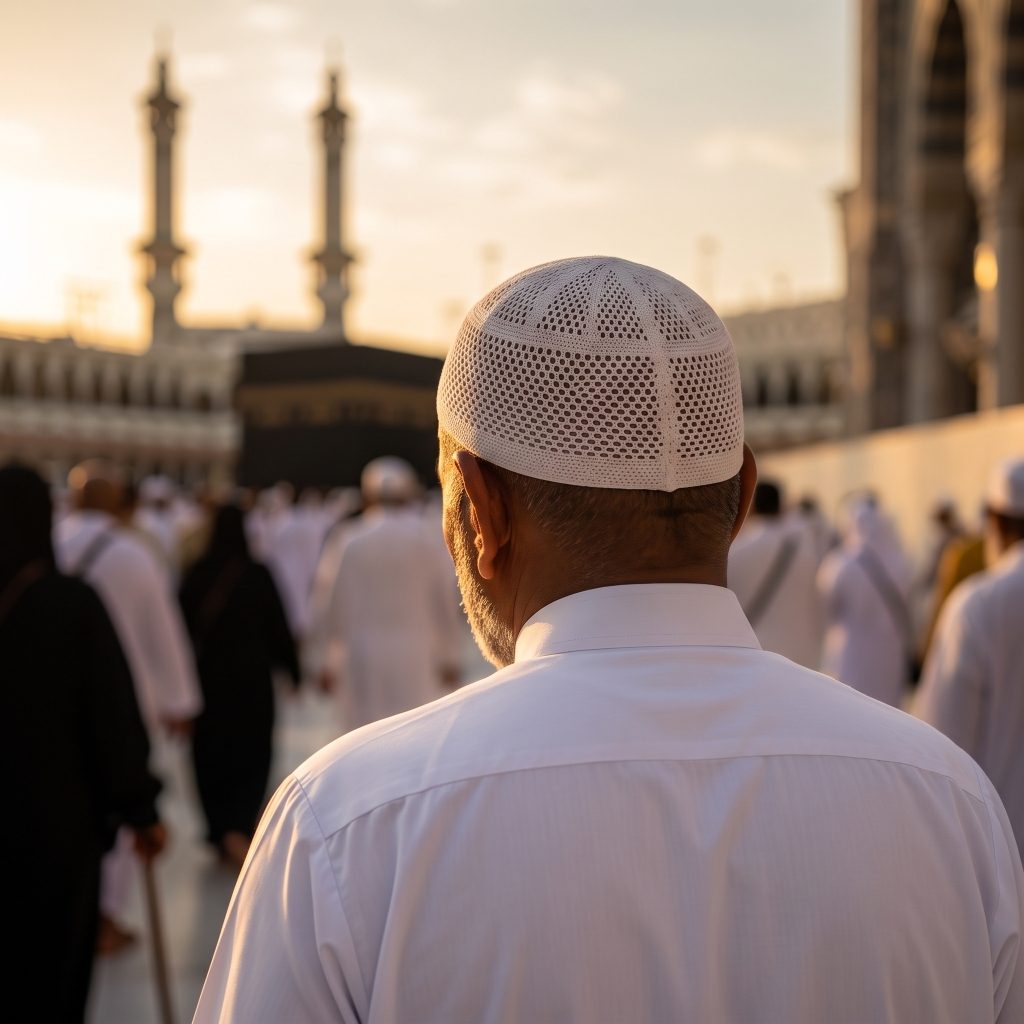
The heat of the Arabian Peninsula paired with long hours spent performing worship means that your choice of clothing can directly impact your physical ease. For brothers looking to cover their heads outside the state of Ihram, selecting the right headwear is key. You need something that provides ventilation, packs easily without losing shape, and stays comfortable throughout long days at the Grand Mosque.
Why Traditional Rigid Caps Can Be Challenging When Traveling
Rigid, structured caps like heavy felt fezzes or stiff padded designs look incredibly sharp for local Friday prayers or special occasions. However, they are not always the most practical companions for long-distance travel. Packing a rigid hat into a crowded suitcase or carry-on bag often leads to crushed brims, permanent creases, or awkward packing arrangements that take up valuable room.
Additionally, stiff materials do not always offer the high level of air circulation required during outdoor walks between your hotel and the Haram in peak heat. When traveling light, flexibility and breathability become your top priorities.
Key Characteristics of the Ultimate Travel Kufi
When curating your travel wardrobe for pilgrimage, look for headwear options that meet three essential criteria:
- Packability and Resiliency: Soft caps that fold flat, roll up, or compress effortlessly into your pocket or daypack without wrinkling allow you to keep your headwear safe during ablution (Wudu) or rest periods.
- Maximum Breathability: Open-weave knits, mesh panels, and lightweight synthetic or cotton yarns allow heat to escape, keeping your scalp cool under the hot sun.
- Easy Maintenance: Journeys involve sweat, dust, and frequent wear. Quick-drying fabrics that can be rinsed out in a hotel sink and dried overnight ensure fresh wear every day.
Top Headwear Styles for Pilgrims
Depending on your personal preference and planned activities, several distinct styles stand out as ideal travel companions:
1. Open-Weave Nylon Caps
Lightweight nylon stretch caps are arguably the most practical option for active pilgrims. Constructed with open crochet patterns or micro-mesh weaves, they weigh almost nothing and provide maximum airflow. Nylon fibers are naturally moisture-resistant and remarkably durable. You can effortlessly stash one in your pocket when stepping into the prayer hall, knowing it will retain its stretch and shape when worn. For a versatile selection of packable designs, explore our nylon caps collection built specifically for active and daily travel ease.
2. Breathable Cotton-Stretch Knits
If you prefer natural fibers against your skin, fine cotton-stretch knits offer soft, gentle comfort. Cotton excels at absorbing moisture, making it ideal for lengthy stays inside air-conditioned mosques following walks in the sun. Soft cotton caps conform naturally to the shape of your head without applying excess pressure, preventing headaches during long periods of Dhikr and recitation.
3. Soft Foldable Embroidered Caps
For times when you want a more refined look, such as visiting the Prophet’s Mosque in Madinah, soft embroidered caps offer an excellent balance of elegance and convenience. Unlike rigid designs, soft embroidered caps maintain a neat aesthetic while still laying flat inside your luggage.
Practical Tips for Managing Your Headwear on Pilgrimage
A few simple habits can help keep your headwear clean and comfortable throughout your trip:
- Pack at Least Three Caps: Keep one in your daypack, wear one, and keep a clean spare in your hotel room. This rotation ensures you always have a fresh option ready.
- Wash Frequently: Give your nylon or cotton caps a quick hand wash using mild soap in your hotel room after a long day. They typically dry in just a few hours.
- Use a Dedicated Pocket: Dedicate a small zippered compartment in your waist bag or shoulder pouch specifically for your cap during Wudu so it never touches wet floor surfaces.
By choosing lightweight, flexible headwear tailored for warm climates and constant movement, you remove unnecessary daily distractions. This allows you to focus fully on the quiet devotion, gratitude, and spiritual connection that make Hajj and Umrah so profound.

Comments