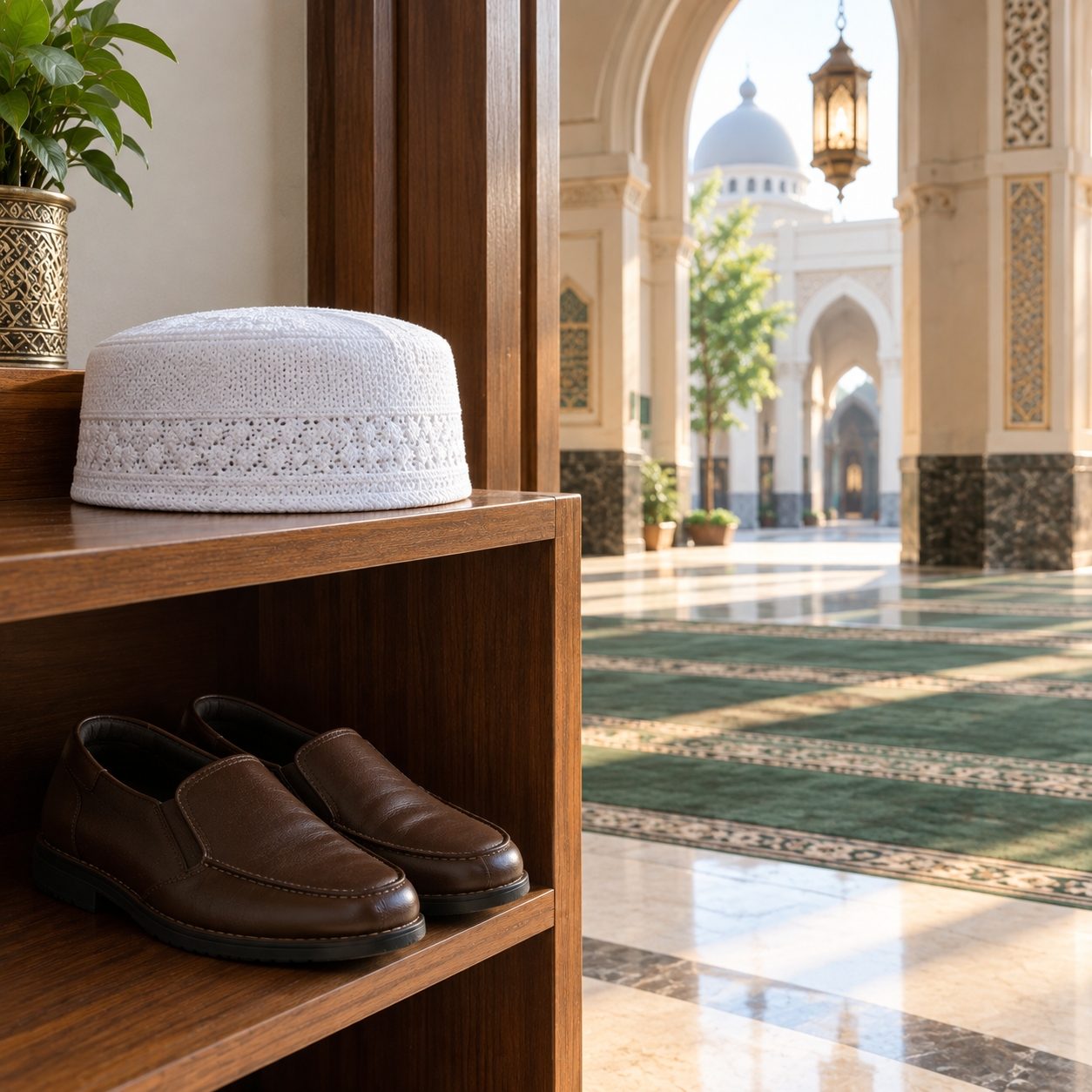
Visiting a mosque should feel peaceful. Whether you are heading to your local masjid for Fajr, joining Jumu’ah, attending a class, or visiting a mosque while traveling, a few simple habits can help you enter with the right frame of mind and show consideration for everyone around you.
A mosque is more than a building where Muslims gather for prayer. It is a place of worship, remembrance, learning, community, and reflection. The word masjid itself is connected to the idea of prostration before Allah. For a little background on the history and role of mosques, you can explore this overview of the mosque and this introduction to mosques and their development.
1. Come With a Clean Body and Clean Clothing
One of the simplest ways to respect the mosque is to arrive clean and presentable. Islam places great importance on cleanliness, and this naturally extends to the places where we worship.
Before coming to the mosque, make sure your clothing and body are clean and free from anything that could inconvenience other worshippers. If you have just eaten something with a strong smell, especially raw garlic or onion, the Prophet Muhammad ﷺ instructed Muslims not to attend the mosque in a condition where the smell could disturb others.
This is not simply about making a good impression. It is about consideration. The person praying beside you may be trying to concentrate, recite Qur’an, or make du’a. Avoiding strong odors is a small act of courtesy that can make a real difference.
2. Dress Respectfully for the Mosque
The Qur’an reminds believers: “Take your adornment at every masjid.” (Qur’an 7:31). This gives us a beautiful general principle: when coming before Allah, we should make an effort to dress appropriately, modestly, and respectfully.
This does not mean that everyone must dress in exactly the same way. Muslim communities around the world have wonderfully diverse traditions. A Moroccan djellaba, Indonesian sarong and shirt, South Asian kurta, West African clothing, Arab thobe, or simple trousers and a clean shirt can all be part of a Muslim’s normal mosque attire.
The important thing is modesty, cleanliness, and respect for the sacred setting.
3. What About Headwear?
This is where mosque entry etiquette headwear can sometimes become confusing, especially when visiting a mosque with customs different from your own.
There is no universal Islamic rule that every Muslim must wear a particular style of hat or cap simply because they are entering a mosque. Muslims have traditionally worn many different forms of head covering across different regions and periods, while others have prayed without one.
For those who do wear a kufi, prayer cap, turban, or other traditional head covering, it can be a natural part of dressing respectfully for prayer. In many communities, it is also an important expression of local Muslim culture. At the same time, someone should not be made to feel unwelcome simply because they do not have headwear.
If you personally prefer lightweight headwear for prayer or mosque visits, a simple flat-top cap can be an easy and understated choice. You can browse a collection of flat-top Muslim caps if you are looking for something suitable for everyday use.
4. Enter Calmly and Remember Allah
Try not to rush through the mosque entrance as though you are entering any ordinary building. Even when you are running late, take a moment to settle yourself and remember where you are.
The Prophet Muhammad ﷺ taught a specific supplication for entering the mosque. In Sahih Muslim, the Prophet ﷺ taught that when a person enters the mosque, they should send blessings upon the Prophet ﷺ and ask Allah to open the doors of His mercy.
A commonly recited wording is:
اللَّهُمَّ افْتَحْ لِي أَبْوَابَ رَحْمَتِكَ
Allahumma iftaḥ lī abwāba raḥmatik.
“O Allah, open for me the doors of Your mercy.”
Sahih Muslim
There are also established reports concerning entering the mosque with the right foot and leaving with the left. These practices are widely familiar among Muslims and are part of the traditional etiquette of visiting the masjid.
5. Keep Your Voice Gentle
A mosque can be a busy place. People may be praying, reading Qur’an, making dhikr, studying, or simply sitting quietly. Keeping your voice low helps preserve that atmosphere.
This is especially important when entering during an ongoing prayer. Walk quietly, avoid unnecessary conversation, and try not to create distractions for those already praying.
The same principle applies to phones. Put your phone on silent before entering the prayer area. A few seconds of preparation outside the prayer hall can prevent a ringtone from interrupting someone else’s salah.
6. Follow the Local Customs With Good Manners
Not every mosque looks or operates the same way. Some have separate entrances for men and women. Some have designated shoe racks, prayer areas, washing facilities, or particular arrangements for classes and community activities.
If you are visiting a mosque for the first time, simply observe and follow the established arrangements. If you are unsure, asking someone politely is perfectly fine.
Local customs can be meaningful expressions of Muslim culture without necessarily being universal religious requirements. Appreciating that distinction allows us to visit different Muslim communities with humility and good manners.
7. Leave the Mosque With the Same Respect
Good mosque etiquette does not end when the prayer finishes. Gather your belongings quietly, leave the prayer area clean, and make space for others. If you notice litter or something out of place, taking a moment to help can be a small act of service.
The Prophet ﷺ taught that even removing something harmful from the road is an act of charity. The same spirit of consideration is very much at home in the mosque.
A Simple Mindset to Remember
You do not need to memorize a long list of rules before visiting a mosque. Come clean. Dress modestly and respectfully. Enter with remembrance of Allah. Keep your voice gentle. Avoid disturbing people who are praying. Respect the local customs. Leave the space clean.
And perhaps most importantly, remember that the mosque is a place where people come to worship Allah. Some visitors will know every etiquette detail, while others may be entering a mosque for the first time. A welcoming Muslim community makes room for both.
Good manners are often simple. They begin with recognizing that everyone around us is trying, in their own way, to turn their attention toward Allah.

Comments