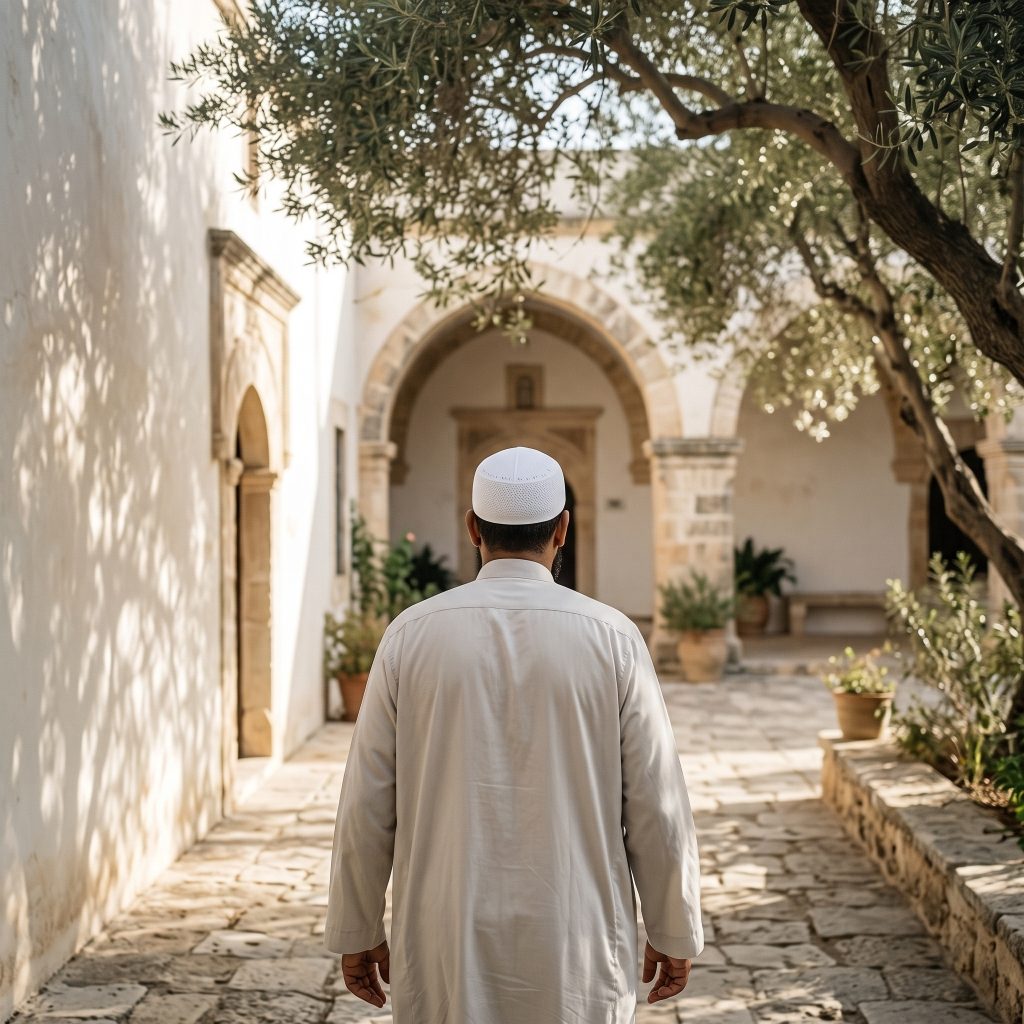
The Tradition of White Headwear in Islamic Practice
There is something timeless about a simple white kufi. It is a familiar sight in mosques, at family gatherings, and among men who have made traditional dress part of their everyday lives. Its clean appearance feels natural, never needing elaborate decoration or drawing too much attention.
For many of us, white headwear brings back familiar memories: a father getting ready for Friday prayer, a grandfather sitting quietly after salah, or the men gathered together for dhikr. These small moments give traditional clothing a meaning that goes beyond the fabric itself. It becomes part of our connection to family, community, and the practices that have been passed down through generations.
White has a special place in Islamic tradition, and there is a beautiful reason for that. The Prophet Muhammad, peace and blessings be upon him, encouraged Muslims to wear white clothing. For those who appreciate traditional headwear, a white kufi is a simple way to carry that familiar beauty into everyday life.
The Prophetic Tradition of Wearing White
In a well-known narration, the Prophet Muhammad, peace and blessings be upon him, encouraged wearing white garments and using white cloth for shrouding the deceased. The hadith is recorded in collections including Sunan Abi Dawud, Jami’ al-Tirmidhi, and Sunan Ibn Majah.
“Wear white clothes, for they are among your best clothes, and shroud your dead in them.”
There is a quiet beauty in this guidance. White is associated with cleanliness, simplicity, and a dignified appearance. It is suitable for everyday wear and special occasions alike, and its place in the funeral shroud reminds us of the simplicity with which we eventually leave this world.
When we choose white clothing, we are embracing a tradition that has been part of Muslim life for centuries. A white kufi fits naturally into this tradition, bringing the same clean and understated appearance to the headwear worn for prayer, gatherings, and daily activities.
The Quiet Appeal of a White Kufi
A white kufi does not need much to look right. Paired with a thobe, a long tunic, or traditional everyday clothing, it creates a neat and familiar appearance. It is equally at home in the masjid, at a family gathering, or during an ordinary day when a man simply prefers to dress in a way that reflects his faith and heritage.
Part of its appeal is its simplicity. There are no bright colors or elaborate patterns competing for attention. The focus stays on the overall appearance, and the kufi can complement many different styles of clothing. For those who appreciate a traditional look, that understated quality is often exactly what makes it special.
Comfort matters, too. A cotton kufi can be a practical choice in warm weather, especially when the fabric is breathable and the fit is comfortable. Whether worn throughout the day or kept especially for prayer and religious gatherings, a good kufi should feel natural rather than something that requires constant adjustment.
Over time, even a simple piece of clothing can become associated with meaningful moments. A particular white kufi might be the one worn for Jumu’ah, during Ramadan, or when visiting family and respected elders. These familiar habits become part of the rhythm of Muslim life.
A Tradition Shared Across Generations
White headwear has a recognizable place in many Muslim communities. In Arab households, white caps and other forms of traditional headwear are often seen during religious gatherings and family occasions. Across Southeast Asia, the white kopiah is a familiar sight in mosques, Islamic schools, and gatherings of remembrance. In other regions, different cap styles and fabrics reflect local traditions and craftsmanship.
Each community has its own way of carrying these traditions forward, but the appreciation for clean, modest clothing is widely understood. A white kufi can connect a young man to the way his father or grandfather dressed, while also feeling entirely natural for someone discovering traditional Muslim clothing for the first time.
Islamic dress has always included a rich variety of styles, shaped by local culture, climate, and the materials available to different communities. You can see this variety in the history of traditional Islamic clothing, from simple everyday garments to the distinctive headwear worn throughout the Muslim world.
For many people, choosing a white kufi is not about making a statement. It is simply a way to dress with familiarity and purpose, keeping a meaningful tradition close in everyday life.
More Than What We Wear
Of course, the value of traditional clothing goes beyond its appearance. A kufi may remind us of prayer, the company of good people, and the importance of carrying ourselves with dignity. But those reminders become most meaningful when they accompany the way we live.
Kindness toward our families, honesty in our dealings, patience with others, and remembrance of Allah are all part of the same journey. Wearing a white kufi can be one small expression of that journey, a familiar part of daily life that helps us feel connected to our faith and community.
There is no need to make the practice complicated. Choose a kufi that fits well, keep it clean, and wear it with appreciation for the tradition it represents. Sometimes the simplest habits are the easiest to maintain, and over the years they become part of who we are.
Finding Your Own Traditional Style
Whether you prefer a lightweight cotton cap for daily prayer or a more structured Habaib-style kufi for gatherings and special occasions, white remains a timeless choice. Its simplicity makes it easy to pair with traditional clothing, while its familiar appearance connects it to a long history of Muslim dress.
If you appreciate the clean silhouette and traditional character of this style, take a look at the Habaib kufi hat collection for designs that bring this classic look into everyday wear.
In the end, the beauty of a white kufi lies in its simplicity. It is a small, familiar part of Muslim life, connected to Prophetic guidance, cherished memories, and traditions shared across generations. Sometimes there is no need to say much more. A clean white cap, worn with sincerity, speaks for itself.

Comments