From North Africa to a Wider Muslim World
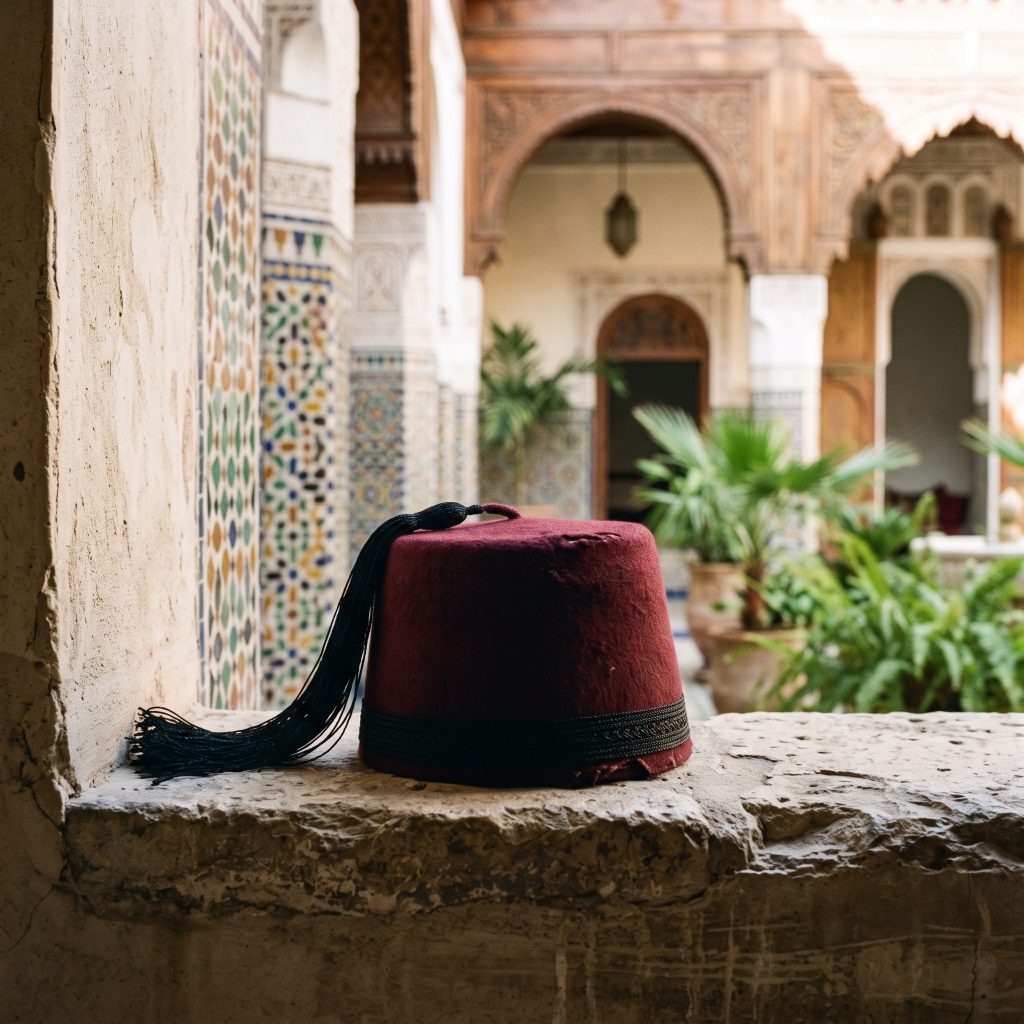
The city of Fez has long been one of the great cultural centers of Morocco. Founded in the late eighth and early ninth centuries, it developed into an important center of scholarship, craftsmanship, trade, and Islamic learning. Over time, the name “Fez” became attached in European usage to the distinctive brimless felt cap associated with the region.
Early forms were not necessarily identical to the fez we picture today. Historical examples varied in color, shape, height, and the way they were worn. Some early versions were used beneath a wrapped turban, while later versions developed into the more recognizable standalone cap. The Encyclopaedia Britannica overview of the fez provides useful background on this evolution and the hat’s association with the Ottoman world.
Felt was particularly well suited to this type of headwear. It could be shaped into a firm but relatively lightweight form, giving the cap its distinctive structure. The traditional red color eventually became especially recognizable, although historical fezzes could also be found in other colors and styles.
The Ottoman Transformation
The most important chapter in the history of the fez began in the Ottoman Empire during the nineteenth century.
When Sultan Mahmud II came to power, the Ottoman state was undergoing major military and administrative changes. In 1826, the Janissary corps was abolished, and a new army was established with uniforms influenced by European military dress. The fez became part of this new visual identity.
Its adoption did not happen simply because the cap was fashionable. Headwear had long carried social meaning in Ottoman society. Turbans, caps, robes, and other elements of dress could communicate a person’s position, profession, or community. Mahmud II’s reforms sought to change this system of visible distinctions.
By 1829, Ottoman regulations required many civil officials to adopt the fez as part of a standardized form of dress. The new outfit combined the fez with a European-style coat, trousers, and boots. The Metropolitan Museum of Art’s discussion of later Ottoman dress describes how this reform replaced older forms of clothing that had visibly distinguished rank and religious affiliation.
That history gives the fez an interesting place in Ottoman culture. It became associated with modernization, bureaucracy, and the changing identity of the empire. At the same time, it was worn by people from many different communities and gradually became a familiar part of everyday life across Ottoman cities.
A Hat That Became Part of Daily Life
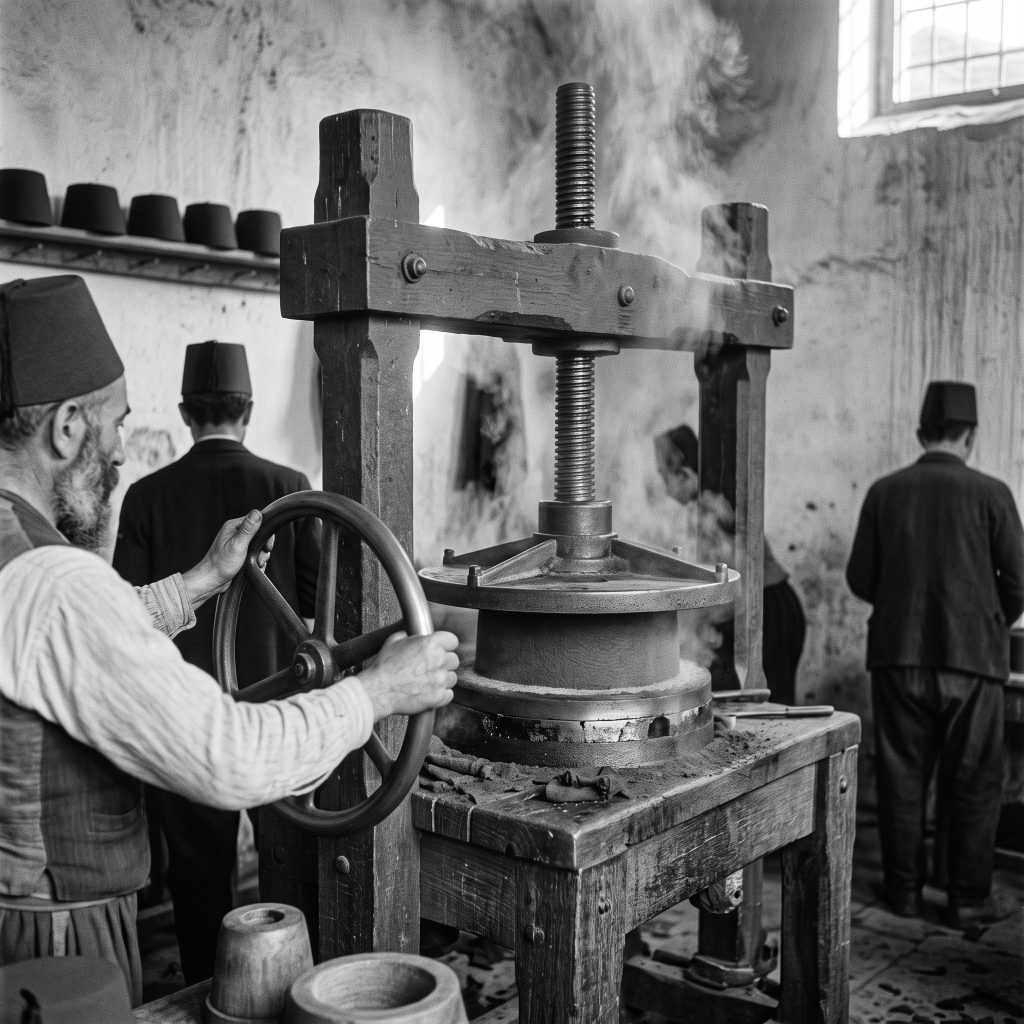
As demand increased, production expanded. Tunisian craftsmanship played an important role in the earlier history of fez making, while Ottoman authorities also developed manufacturing facilities to supply the growing demand. Istanbul became an important center of production, and the hat developed many regional variations.
Not every fez looked exactly alike. Differences could be seen in the height and firmness of the crown, the shade of red, the material, and the length and style of the tassel. These details changed with time, fashion, local production, and the preferences of different communities.
The fez also traveled well beyond the Ottoman heartlands. It became familiar throughout much of North Africa and the Middle East, including Egypt and other regions where Ottoman cultural influence was strong. Its presence in different societies should not be understood as evidence that all Muslim communities shared one dress tradition. Rather, the fez became one of many garments and forms of headwear that were adapted into local cultures.
This is an important part of appreciating its history today. Muslim dress has never been limited to one universal style. Across the different madhabs and across the many cultures of the Muslim world, clothing traditions have developed according to local history, climate, craftsmanship, custom, and personal preference. The fez belongs to that broader story of cultural diversity.
From Symbol of Modernity to Symbol of Tradition
Perhaps the most fascinating part of the fez’s history is how its meaning changed over time.
In the early nineteenth-century Ottoman context, it was closely connected with reform and a new vision of state identity. Later, as Western-style hats and other fashions became more common, the fez could take on almost the opposite meaning. It increasingly came to represent Ottoman heritage and traditional Muslim identity.
Its story continued differently in different countries. In Turkey, the fez was prohibited under the 1925 Hat Law during the republican government’s program of dress reform. Elsewhere, however, it remained part of cultural memory and, in some communities, continued to be worn.
The historical overview of the fez offers a broader look at how the headwear developed and how its meaning shifted across different periods and regions.
Why the Classic Fez Still Matters
Today, the fez can be easy to recognize but harder to place historically. It is sometimes reduced to a costume or a generic symbol of the “Orient,” which misses much of its real story. Behind its simple shape is a long history of craftsmanship, changing governments, cultural exchange, and communities adapting familiar forms of dress to their own surroundings.
For those interested in Muslim clothing traditions, that history is worth remembering. A piece of headwear does not need to belong exclusively to one country or one period to have cultural meaning. The fez became part of several overlapping worlds, carrying different associations as it moved from North Africa into the Ottoman sphere and across the wider region.
That enduring silhouette is one reason the fez continues to appeal today. If you appreciate the iconic shape of traditional fez headwear, you can explore the faux felt fez hats collection for contemporary styles inspired by this historic form.
Ultimately, the history of the classic fez is a reminder that clothing can tell stories that written records sometimes cannot. A small felt cap can reflect the movement of people, ideas, craftsmanship, and changing identities across generations. Worn with an understanding of that history, the fez becomes more than a recognizable shape. It becomes a small, tangible connection to the rich and varied cultural heritage of the Muslim world.

Comments