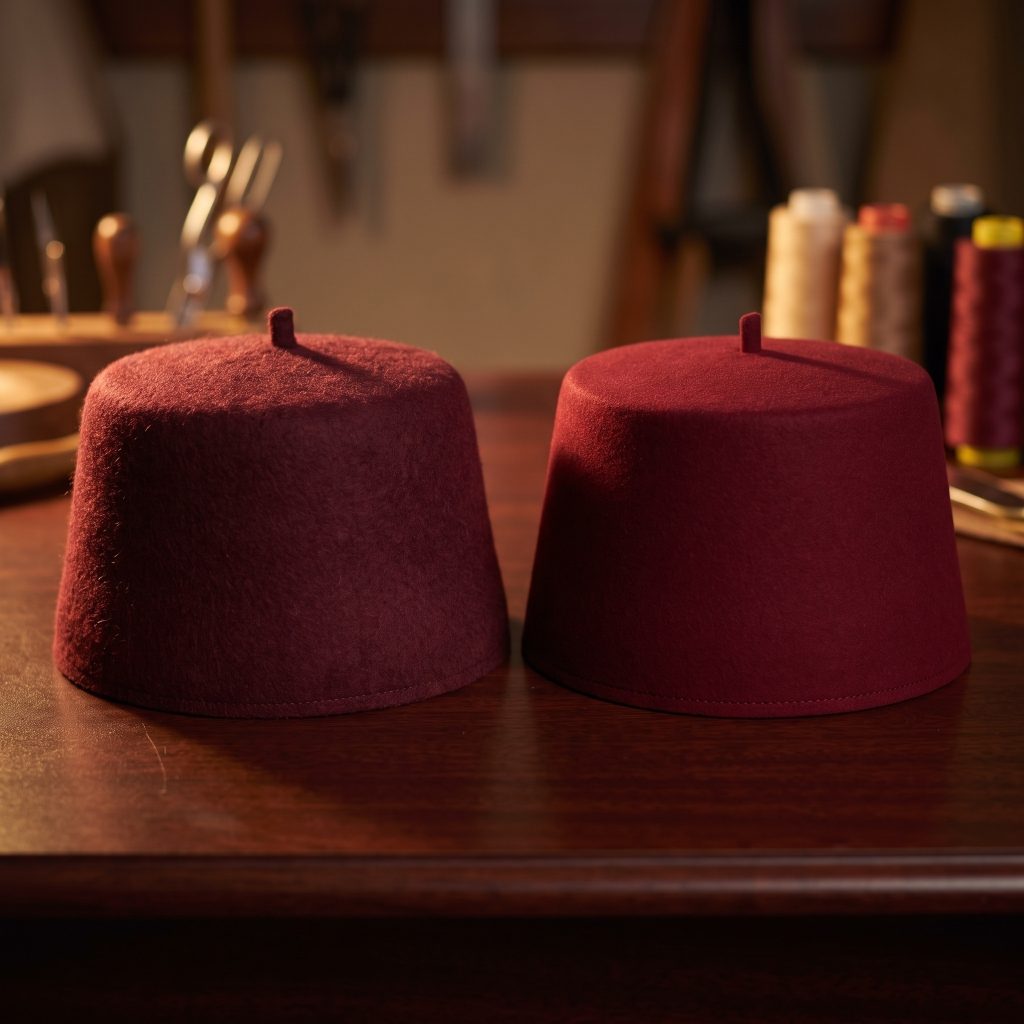
The Heritage of Natural Wool Felt
Traditional felt is one of humanity’s oldest textiles, created not through weaving or knitting, but through moisture, heat, and friction that interlock natural sheep wool fibers together into a dense, solid fabric. This process results in a material that is naturally rich, resilient, and structurally firm.
Key Benefits of Wool Felt:
- Natural Temperature Regulation: Wool is a naturally breathable fiber that insulates against cold while allowing body heat and moisture vapor to escape, making it surprisingly comfortable across changing seasons.
- Rich Depth and Tactile Warmth: Pure wool felt has a subtle, organic texture and deep color absorption that synthetic materials rarely replicate entirely.
- Self-Restoring Resilience: Wool fibers possess natural elasticity. With gentle steam and proper care, a natural wool felt cap can easily be reshaped and maintained for years.
The Practical Appeal of Faux Felt
Modern textile advances have introduced high-quality faux felt, typically crafted from dense polyester or acrylic microfibers. Engineered to mimic the visual aesthetic of natural felt, faux felt offers practical advantages for daily wear, travel, and budget-conscious wardrobes.
Key Benefits of Faux Felt:
- Lightweight and Uniform Finish: Faux felt caps feature an even, smooth texture with a crisp finish that keeps its clean appearance consistently.
- Moisture Resistance: Synthetic fibers do not absorb moisture as readily as natural wool, making faux felt less prone to water spotting during unexpected rain or moisture contact.
- Accessible and Everyday-Friendly: Faux felt offers the elegant profile of structured traditional headwear at a accessible price point, ideal for regular, worry-free wear. To explore structured designs crafted for convenience, view our felt fez hats collection.
Comparing Care and Maintenance
Proper maintenance ensures your headwear retains its pristine form over years of use. However, natural wool and synthetic felt require slightly different care approaches:
Caring for Wool Felt:
- Brushing: Use a soft-bristled clothes brush in a gentle counter-clockwise motion to remove dust and lint without fraying the surface fibers.
- Drying: Never apply direct heat like a hairdryer to wet wool felt, as this can shrink or distort the shape. Allow it to air-dry naturally at room temperature, placed over a hat block or rounded bowl.
- Storage: Store in a cool, dry area with cedar wood or natural lavender to protect natural wool fibers from closet pests.
Caring for Faux Felt:
- Spot Cleaning: Faux felt can be gently spot-cleaned with a damp microfiber cloth and mild detergent for simple maintenance.
- Dust Removal: A lint roller or soft brush quickly restores the smooth surface without pulling fibers.
- Storage: Keep in a dry closet away from heavy crush weight to preserve its firm crown structure.
Making the Right Choice for Your Wardrobe
If you cherish traditional craft, natural fiber breathability, and deep tactile quality for special occasions, natural wool felt is a worthy investment. If you seek a lightweight, durable, and easy-care option for frequent daily wear or travel, faux felt provides the perfect blend of style and convenience.
Both materials honor a rich heritage of structured Islamic headwear, allowing you to step into the mosque or family gathering with confidence, modesty, and grace.

Comments